20/12/2025
Culture and Human Capital as Core Values in the Era of Integration and Rising
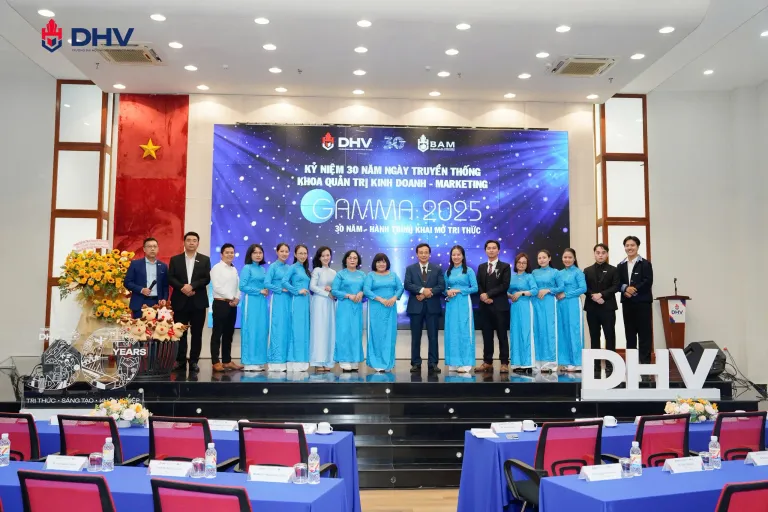
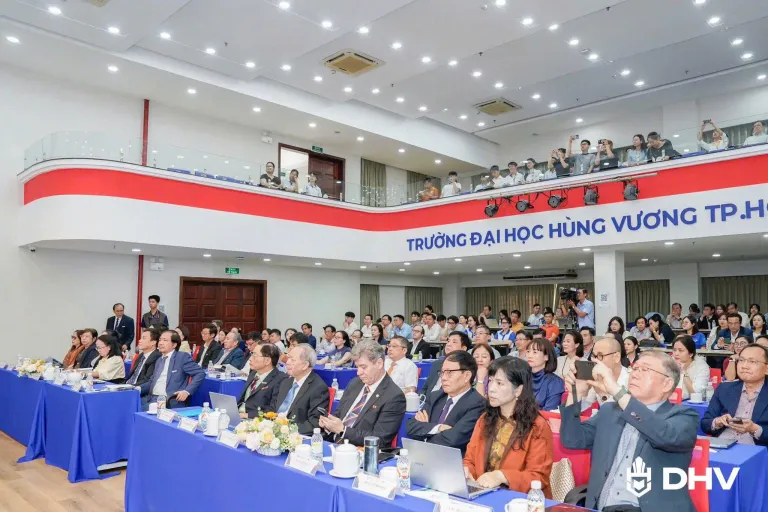
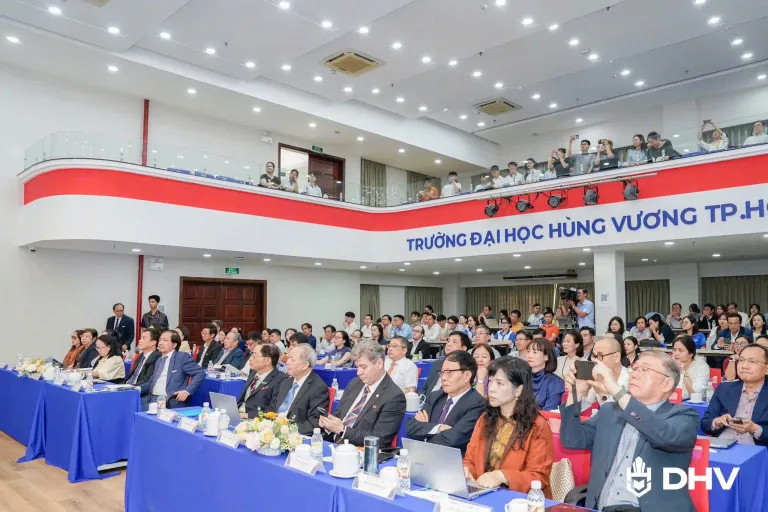
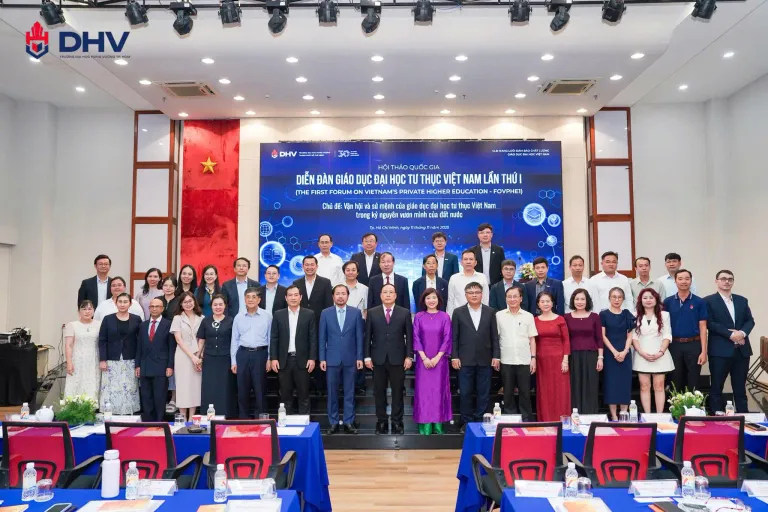
On December 20, 2025, at the campus located at 194 Le Duc Tho (An Nhon Ward, Ho Chi Minh City), Hung Vuong University of Ho Chi Minh City (DHV) successfully hosted the DHV-2025 International Scientific Conference under the theme: “Culture and People in the Era of Integration and Rising.”
This conference serves as a strong affirmation of the University's strategic vision within the evolving historical context, emphasizing the pivotal role of culture and human resources amidst the trends of globalization and international integration.
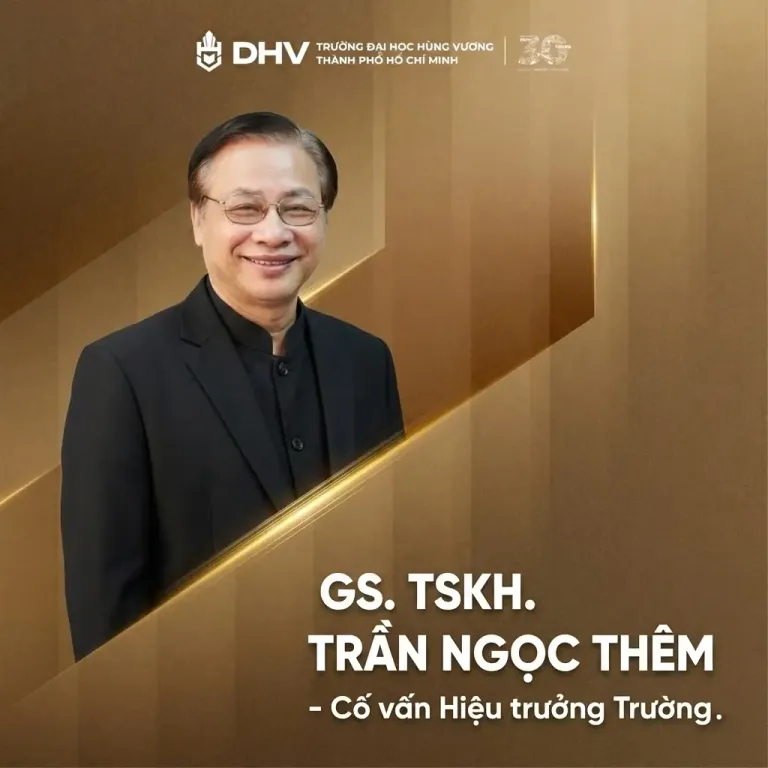
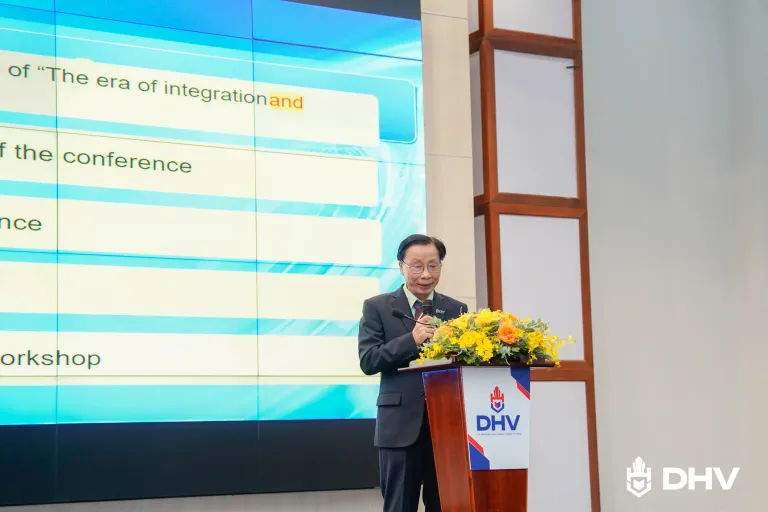
Notably, the keynote address delivered by Prof. Dr. Sc. Tran Ngoc Them – a renowned Cultural Researcher and Advisor to the Rector of Hung Vuong University of Ho Chi Minh City (DHV) – provided profound insights, redefining the stature of culture and human capital in a world increasingly driven by global integration.
 Prof. Dr. Sc. Tran Ngoc Them
Prof. Dr. Sc. Tran Ngoc Them – Cultural Researcher and Advisor to the Rector of Hung Vuong University of Ho Chi Minh City (DHV) – delivers the Keynote Address at the DHV-2025 International Scientific Conference: 'Culture and People in the Era of Integration and Advancement'.
From "The World is Flat" to "Selective Globalization"
Looking back at the first quarter of the 21st century, humanity has witnessed tumultuous upheavals: from the zenith of globalization to financial crises, from the surge of populism to the COVID-19 pandemic and complex geopolitical conflicts. Prof. Dr. Sc. Tran Ngoc Them posits that the world is no longer "flat" in the sense Thomas Friedman once famously articulated.
We are entering an era of "selective globalization" and "partial deglobalization." This characterizes a flexible multipolar world where nations must navigate a dual imperative: opening doors for cooperation while decisively safeguarding their autonomy and national identity. In this context, the pivotal question is no longer merely "How do we integrate?" but rather "Who are we within this process of integration?"
"Rising Up" – The Aspiration Embodied by the Legend of Saint Giong
The phrase "The Era of Rising Up" has become a defining historical keyword for Vietnam since late 2024, following strategic declarations by General Secretary To Lam. While a "new era" is a concept as old as history itself, the "Era of Rising Up" represents a creative conceptualization deeply imbued with Vietnamese identity.
From a cultural perspective, Prof. Dr. Sc. Tran Ngoc Them deconstructed the term "vươn" (to rise/reach) into three layers of meaning: the physical extension of the body, positive development, and the relentless effort to reach the pinnacle. The imagery of "Rising Up" immediately evokes Saint Giong – a cultural symbol of exponential growth and breakthrough capability in response to historical urgencies.
World history has recorded magnificent "risings": Japan during the Meiji Restoration, South Korea under Park Chung Hee, and Singapore under Lee Kuan Yew. Vietnam, after nearly 80 years of nation-building and 40 years of Doi Moi (Renovation), has now achieved the necessary maturity to enter a similar era of breakthrough development. This is not merely a declaration; it is a reality taking shape.

The Philosophy of "Harmony without Uniformity" – The Stance of the Superior Man
A distinctive highlight in Prof. Dr. Sc. Tran Ngoc Them’s keynote address was the application of Eastern philosophy to modern governance and integration. He revisited the teaching of Confucius: “The Superior Man aims for harmony but not uniformity; the small man aims for uniformity but not harmony.”
In the era of integration, Vietnam adopts the stance of the "Superior Man": embracing openness, readiness for dialogue, and respect for international standards, while steadfastly maintaining independence, autonomy, and cultural identity. We pursue "integration without assimilation." Conversely, passively chasing foreign trends and losing national character represents a lack of fortitude—a form of "assimilation." In this context, culture acts as the "spiritual DNA," ensuring development remains human-centric and sustainable.
Three Pillars for Development
The DHV-2025 International Scientific Conference: “Culture and Human Capital in the Era of Integration and Advancement” gathered 69 research papers from scholars both domestic and international (including Russia, China, South Korea, and Taiwan), focusing on three core pillars:
- Culture and Human Capital: Identified as the spiritual foundation and central resource. Individuals in the new era are not only national citizens but also "global citizens" who retain their national identity, capable of harmonizing tradition with modernity.
- Science and Education: Defined as the driving force of power. The conference emphasized reforming educational philosophy towards a liberal and creative orientation, fostering close linkages between universities and enterprises in the digital age.
- Economy and Entrepreneurship: Recognized as the path to escaping the middle-income trap. Building a knowledge economy based on endogenous strength will enhance the nation’s global competitiveness.
The connectivity of these three pillars creates a comprehensive development ecosystem, where spiritual values propel material values, and vice versa.
DHV-2025: The Mission of Hung Vuong University of Ho Chi Minh City Marking the 30-Year Milestone
The DHV-2025 International Scientific Conference holds special significance within the series of events celebrating the 30th Anniversary of Hung Vuong University of Ho Chi Minh City (1995–2025).
As a higher education institution with a rich tradition, Hung Vuong University of Ho Chi Minh City (DHV) is striving to affirm its role in cultivating human resources for the "Era of Rising Up." Prof. Dr. Sc. Tran Ngoc Them asserted that faith in the soft power of culture and the creative capacity of the young generation is the key to realizing the nation's aspirations.
The conference serves as a lever to develop a new thinking paradigm, reflecting the trends of the times and the nation's vision within the flow of human civilization. It aims to shape humanist individuals who, armed with national cultural identity, will lead the country through integration and globalization into the new era.
Furthermore, the conference expects to establish the concept of the "Era of Integration and Rising Up" as a new mindset model. It contributes to refining the theoretical framework for sustainable development based on culture and people, suggesting specific policies for education, science, and the creative economy, while spreading Vietnam's aspiration to rise up in the 21st century.